Research Use Only. Lipo-C is sold as a chemical reagent for in-vitro laboratory research, not for human or veterinary use. It is not a drug, supplement, or compounded preparation. It must be handled by qualified professionals. Wholesale Peptide Supply is not a pharmacy or compounding facility under 503A or 503B.
Wholesale Lipo-C — Bulk Research Supply
Buy Lipo-C wholesale and in bulk from a US-based research peptide supplier. Every lot is sourced in the USA and third-party tested, with the lab and method on each lot's certificate. Bulk Lipo-C is quoted by dose and volume from a 3-kit (30-vial) order minimum, mix and match across doses and compounds; lower prices are earned at 10 kits and again at 100 kits in the order, mix and match.
Lipo-C is a lipotropic compound formulation studied for lipid metabolism, hepatic function, and mitochondrial fatty acid oxidation. Typically combines methionine, inositol, choline, and B-vitamin cofactors.
Wholesale Catalog
Available Doses
Published per-vial wholesale pricing for Lipo-C. Sold in kits of 10 vials with a 3-kit (30-vial) order minimum, mix and match across doses and compounds; lower prices apply at 10 kits and at 1,000+ vials in the order. Contact us for larger or custom-volume quotes — answered the same day. Urgent? Text or call (714) 625-9215 — you’ll reach a real person in the United States, not a chatbot or an overseas call center.
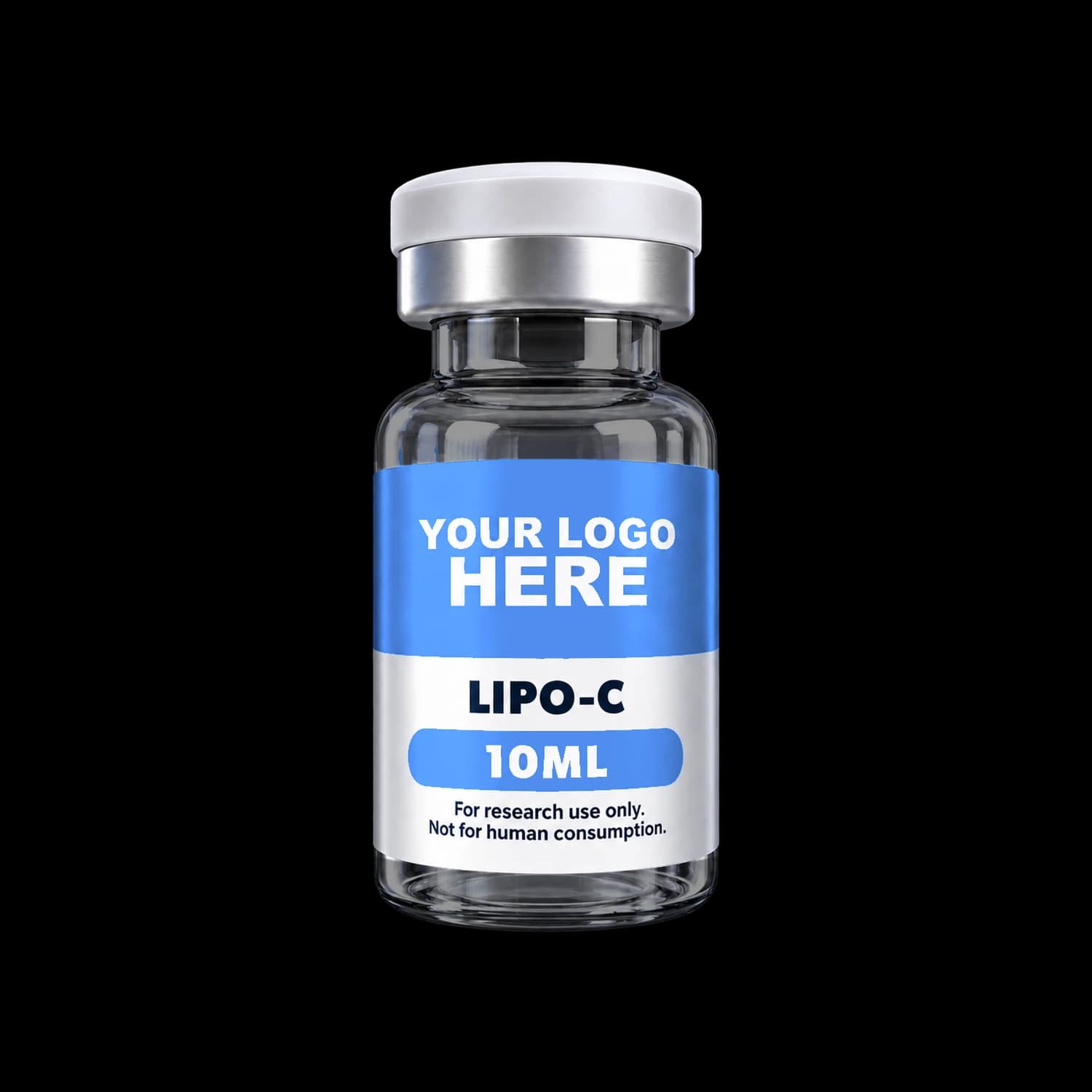
Lipo-C 10ml
WPSLP12 · CAS Multi-component · Metabolic & Lipotropic
Discontinued
This product is no longer stocked and is not being restocked.
Questions? Text a rep or call (714) 625-9215 — a real person in the US answers.
Overview
Lipo-C is a lipotropic compound formulation studied for lipid metabolism, hepatic function, and mitochondrial fatty acid oxidation. Typically combines methionine, inositol, choline, and B-vitamin cofactors.
History
Lipotropic agents support fat mobilization from the liver and facilitate lipid transport in metabolic research.
Composition and research context
Lipo-C is a lipotropic combination preparation rather than a single defined compound, which is why it carries no single CAS number. It is supplied as a solution combining lipotropic agents — the methionine, inositol and choline group — with L-Carnitine, and is catalogued as a multi-component product for that reason.
Because it is a blend, the meaningful specification is the concentration of each component rather than a single molecular weight or formula. Buyers evaluating Lipo-C against a competitor's preparation are comparing component ratios, not purity of one molecule, and the two preparations are only equivalent if those ratios match.
Handling and storage (research use)
Lipo-C ships as a 10 mL solution rather than a lyophilized powder, so no reconstitution step is required. It is stored refrigerated at 2-8°C and protected from light.
As a multi-component solution it should not be assumed to behave like the single-compound reagents in the catalog: the components have different stability profiles, and the preparation as a whole is used within the window the study defines rather than held indefinitely once opened. General laboratory reagent guidance only; not for human or veterinary use.
Wholesale sourcing notes
Lipo-C is the highest-volume item in the metabolic and lipotropic category and is most often ordered alongside L-Carnitine. It is supplied in 10 mL presentation, sourced in the USA through the same controlled supply chain as the rest of the catalog.
For a blend, the Certificate of Analysis documents component composition rather than the single-analyte purity figure reported for the peptide range — a different document answering a different question. A per-lot COA is included with every order at no charge.
Key Areas of Research
- Hepatic lipid mobilization
- One-carbon metabolism
- Mitochondrial fatty acid oxidation
References
- Component reviews: methionine, inositol, choline biology.
Lipo-C — Frequently Asked Questions
- What is Lipo-C?
- Lipo-C is a lipotropic compound formulation studied for lipid metabolism, hepatic function, and mitochondrial fatty acid oxidation. Typically combines methionine, inositol, choline, and B-vitamin cofactors.
- What doses of Lipo-C are available wholesale?
- Wholesale Peptide Supply stocks Lipo-C in 10ml. Wholesale pricing is provided by quote based on order volume, from a 3-kit (30-vial) order minimum, mix and match across doses and compounds.
- Is Lipo-C third-party tested?
- Yes. Every lot of Lipo-C is tested by an independent third-party laboratory, and a per-lot Certificate of Analysis documenting identity and purity is included with every order at no charge, issued in the name of Wholesale Peptide Supply.
- Is Lipo-C for human use?
- No. Lipo-C is sold strictly as a chemical reagent for in-vitro laboratory research and is not for human or veterinary use. Wholesale Peptide Supply is not a pharmacy or compounding facility.
- How do I get wholesale pricing for Lipo-C?
- Request a quote through our contact form or open a wholesale account. An account manager replies with volume pricing and lead times the same day. For anything urgent, text or call (714) 625-9215 to reach a real person in the US.
- Can I order Lipo-C in bulk?
- Yes. Lipo-C is available for bulk and wholesale orders, quoted by dose and volume, from a 3-kit (30-vial) order minimum, mix and match across doses and compounds, with lower prices at 10 kits and at 100 kits (1,000 vials) in the order. Submit the doses and quantities you need for a bulk quote.
- Why does Lipo-C not have a CAS number?
- Lipo-C is a multi-component lipotropic preparation, not a single chemical entity, so no single CAS registry number applies. Its meaningful specification is the concentration of each component in the blend. The per-lot Certificate of Analysis documents composition rather than single-analyte purity.
- How is Lipo-C supplied?
- Lipo-C ships as a 10 mL solution, not a lyophilized powder, so it requires no reconstitution. It is stored refrigerated at 2-8°C and protected from light. It is most often ordered alongside L-Carnitine.
Related Compounds
Metabolic & Lipotropic
L-Carnitine
L-Carnitine is a quaternary ammonium compound serving as the obligate cofactor for mitochondrial long-chain fatty acid oxidation via CPT-I/CPT-II.
View details →Metabolic & Lipotropic
B-12
Vitamin B-12 (cyanocobalamin) is a cobalt-containing corrinoid cofactor. It is supplied as a laboratory reagent and is commonly stocked alongside lipotropic research formulations.
View details →GLP-1 & Metabolic
Semaglutide
Semaglutide is a synthetic peptide analog that functions as a long-acting pathway agonist, structurally modified for extended half-life and improved target binding affinity. It is studied in preclinical and laboratory models for its ability to activate target pathways and modulate downstream molecular signaling associated with endocrine regulation.
View details →GLP-1 & Metabolic
Tirzepatide
Tirzepatide is a synthetic peptide that functions as a dual pathway agonist, designed as a once-weekly investigational compound studied in preclinical laboratory models for receptor-mediated signaling and modulation of downstream cascades.
View details →GLP-1 & Metabolic
Retatrutide
Retatrutide is a synthetic investigational peptide developed as a multi-pathway agonist, representing the next generation of metabolic research compounds. It activates multiple target receptor subtypes for broad systemic effects studied in preclinical models.
View details →Secretagogue Peptides
Ipamorelin
Ipamorelin is a synthetic pentapeptide and selective secretagogue-type agonist with minimal off-target pathway interference, used to study endocrine signaling and somatotroph axis modulation.
View details →Recovery & Structural
BPC-157
BPC-157 is a synthetic pentadecapeptide composed of 15 amino acids, originally derived from a naturally occurring protein fragment in gastric tissue. It has been studied extensively for its potential influence on molecular signaling, structural remodeling, and angiogenic processes.
View details →Anti-Aging & Longevity
GHK-Cu
GHK-Cu is a naturally occurring copper-binding tripeptide studied for its role in molecular signaling, matrix remodeling, and pathway dynamics.
View details →